
Every business reaches a point where outdated or insufficient equipment becomes a barrier to growth. Whether you need a commercial kitchen appliance, heavy construction machinery, or the latest technology hardware, acquiring the right tools can feel financially overwhelming, especially when you are just starting out.
This is where equipment financing becomes a game-changer for business owners at every stage. Rather than draining your cash reserves on a single large purchase, equipment financing gives you structured, manageable ways to get the tools your business needs today while preserving your working capital for other priorities.
But not all financing options work the same way, and choosing the wrong one can cost you more than you expect. In this guide, we will break down exactly how equipment financing works, explore the most common options available, and help you compare them side by side. By the end, you will have a clear understanding of which path makes the most sense for your specific situation, your budget, and your long-term business goals. No financial background required.
What Is Equipment Financing?
Equipment financing is any funding arrangement that allows a business to acquire the tools, machinery, or technology it needs right now and pay for those assets over time, rather than draining working capital in a single upfront purchase. Instead of writing a check for the full cost of a piece of equipment, your business obtains the asset immediately while spreading payments across a defined repayment term. This structure preserves cash flow for payroll, inventory, and day-to-day operations, making it one of the most practical capital strategies available to growing businesses. Today, more than 75% of all equipment and software purchases are financed rather than paid for outright, a figure that reflects just how foundational this approach has become across every major industry.
The Three Primary Structures
Equipment financing is not a single product; it is an umbrella term covering three distinct arrangements, each suited to different business goals.
Equipment loans give your business outright ownership of the asset. The lender funds the purchase, holds a security interest in the equipment until the loan is repaid, and you walk away as the legal owner once the final payment clears. Equipment leases work differently: the lender or leasing company retains ownership while you pay to use the asset for an agreed term, typically with options to purchase, return, or upgrade at the end of the lease. Equipment lines of credit function as revolving facilities, allowing businesses to draw capital for multiple or ongoing purchases without submitting a new application each time, making them especially useful for companies that acquire equipment in phases or on irregular schedules.
What Qualifies as “Equipment”
The definition of equipment in a financing context is broader than most business owners expect. Financeable assets include construction machinery, commercial vehicles, medical devices, restaurant kitchen buildouts, manufacturing tools, IT hardware, and AI-specific infrastructure. According to industry data tracked by the Equipment Leasing and Finance Foundation, demand is accelerating across nearly every vertical, with healthcare and AI hardware emerging as particularly fast-growing categories.
One critical distinction many SMB owners overlook is that software qualifies as a financeable asset alongside physical equipment. Software has a defined useful life and represents a genuine capital expenditure, and lenders increasingly treat it as such, whether it is bundled with hardware or financed as a standalone purchase. Reviewing current equipment loan and lease statistics confirms this shift is already well underway in lender underwriting practices.
Why Qualification Is More Accessible
Because the equipment itself serves as collateral in most loan and lease structures, lenders carry significantly less risk than they would on an unsecured business loan. This collateralized structure is the primary reason approval rates have reached approximately 78%, near historic highs, with delinquency rates holding at just 2%. For business owners who might not qualify for traditional unsecured credit, equipment financing offers a realistic and well-supported path to the assets their operations require.
Why Most Businesses Finance Equipment Instead of Buying Outright
More than 75% of equipment and software purchases are now financed rather than bought outright. That figure reframes the entire conversation: equipment financing is not a fallback for cash-strapped businesses. It is the default strategy adopted by the majority of businesses across every industry and size category. Understanding why the market moved this direction reveals four compelling advantages that make financing the smarter choice for most operators.
Cash Flow Stays Where It Belongs
When a business deploys a large lump sum to purchase equipment outright, that capital stops working. It converts from a flexible, deployable resource into a fixed asset that depreciates in value over time. Financing spreads that cost across predictable monthly payments, keeping working capital available for payroll, inventory, marketing, and the unexpected expenses that show up without warning. A restaurant that finances a commercial kitchen upgrade, for example, preserves enough liquidity to hire additional staff and stock ingredients for a grand reopening, rather than opening the doors cash-depleted. The equipment earns revenue from day one while the business retains financial breathing room.
The Section 179 Tax Advantage
The U.S. tax code contains a powerful incentive that makes financing even more attractive. Under Section 179 of the Internal Revenue Code, businesses can deduct the full purchase price of qualifying equipment placed in service during the tax year, rather than recovering that cost gradually through multi-year depreciation. Critically, this deduction applies even to financed equipment. A business can make a modest down payment, place the equipment in service before year-end, and still claim the full deduction that tax year. In 2026, 100% bonus depreciation is also available, further strengthening the incentive to act within the tax year. Interest paid on equipment loans may be deductible as well. Recent legislation has permanently expanded Section 179 deduction limits, giving businesses more certainty when planning capital investments.
Avoiding the Obsolescence Trap
Technology, software, and precision machinery lose practical utility over time, not just dollar value. A business that purchases equipment outright owns the full risk of that obsolescence. When the asset ages out of usefulness, the business must absorb the cost of disposal and replacement. Financing structures allow businesses to align equipment lifecycles with contract terms, upgrading at end of term rather than being locked into outdated assets. This flexibility is especially valuable in industries where technology cycles move quickly, such as healthcare, manufacturing, and information technology.
Capital Flexibility as a Competitive Advantage
An unspent credit line or cash reserve is not idle money; it is strategic optionality. Businesses that preserve liquidity by financing equipment can respond to sudden opportunities, absorb market shocks, or invest in growth without seeking emergency capital at unfavorable terms. Financed equipment generates revenue immediately, while the business retains the financial agility to act when conditions demand it. That combination, productive assets plus preserved capital, is why experienced operators consistently choose financing over outright purchase, regardless of whether they have the cash on hand to buy.
Types of Equipment Financing: Loans, Leases, Lines, and EaaS
Not all equipment financing works the same way, and choosing the wrong structure can cost your business far more than the equipment itself. There are four primary models available to business owners today, each built for a different set of priorities. Understanding how they differ is the fastest way to match your financing decision to your actual operating needs.
Equipment Loans
An equipment loan gives your business a lump sum to purchase the asset outright. You own the equipment from day one, and you repay the loan over a fixed term, typically between two and seven years. Because the equipment itself serves as collateral, lenders can offer competitive rates without requiring additional security. Ownership also comes with a tax advantage: businesses can depreciate the asset over its useful life, and many qualify for Section 179 expensing, which allows you to deduct the full purchase price in the year it was placed in service. Equipment loans are the strongest fit for durable, long-lived assets where the value of ownership justifies the commitment.
Equipment Leases
Leasing lets your business use equipment for a defined term without taking on ownership. The types of equipment financing available through leasing break into two distinct structures. An operating lease keeps the asset off your balance sheet entirely; at the end of the term, you can return the equipment, upgrade to a newer model, or sometimes purchase it at fair market value. This structure is purpose-built for technology and medical devices, where a three-year-old machine may already be obsolete. A capital lease, also called a finance lease, functions much closer to ownership; the asset appears on your balance sheet, and the agreement typically includes a buyout option at the end of the term, often for $1 or fair market value. Capital leases work well when you want the financial benefits of ownership without a large upfront purchase.
Equipment Lines of Credit
An equipment line of credit is a revolving facility that gives your business an approved credit limit you can draw from repeatedly as equipment needs arise. Rather than applying for a new loan each time you need to buy a piece of machinery or a fleet vehicle, you draw from the line, repay it, and draw again. Interest accrues only on the balance you have drawn, which preserves flexibility and reduces idle borrowing costs. This structure is ideal for contractors, manufacturers, or any business that purchases equipment across multiple categories on an unpredictable schedule. You can learn more about how these structures compare in a broader equipment finance guide.
Equipment-as-a-Service (EaaS)
EaaS is the newest model in this space, and it is growing quickly. Instead of financing the purchase of equipment, your business pays a recurring subscription that bundles access to the equipment with maintenance, upgrades, software, and support. You pay for uptime and outcomes, not ownership. This mirrors the SaaS model most businesses already use for software and is gaining significant traction in AI hardware, medical technology, and manufacturing, where continuous upgrades and guaranteed performance matter far more than holding an asset on the books.
Side-by-Side Comparison
| Structure | Ownership Outcome | Balance Sheet Treatment | Best Use Case | Typical Term |
|---|---|---|---|---|
| Equipment Loan | Business owns asset | Asset and liability recorded | Long-lived assets; predictable payments | 2 to 7 years (fixed) |
| Operating Lease | Lessor retains ownership | Off balance sheet | Fast-obsolescence equipment (IT, medical) | 1 to 5 years |
| Capital/Finance Lease | Business owns or buys out at term end | Asset and liability recorded | Near-ownership with flexibility | 3 to 7 years |
| Equipment Line of Credit | Business owns purchased assets | Asset recorded when drawn | Frequent or varied equipment needs | Revolving |
| EaaS | Provider retains ownership | Off balance sheet | Uptime-critical, fast-evolving equipment | Monthly subscription |
Each structure solves a different problem. The right choice depends on how long you need the equipment, how quickly it loses value, how often your needs change, and whether ownership itself creates financial benefit for your business.
Which Industries Use Equipment Financing Most?
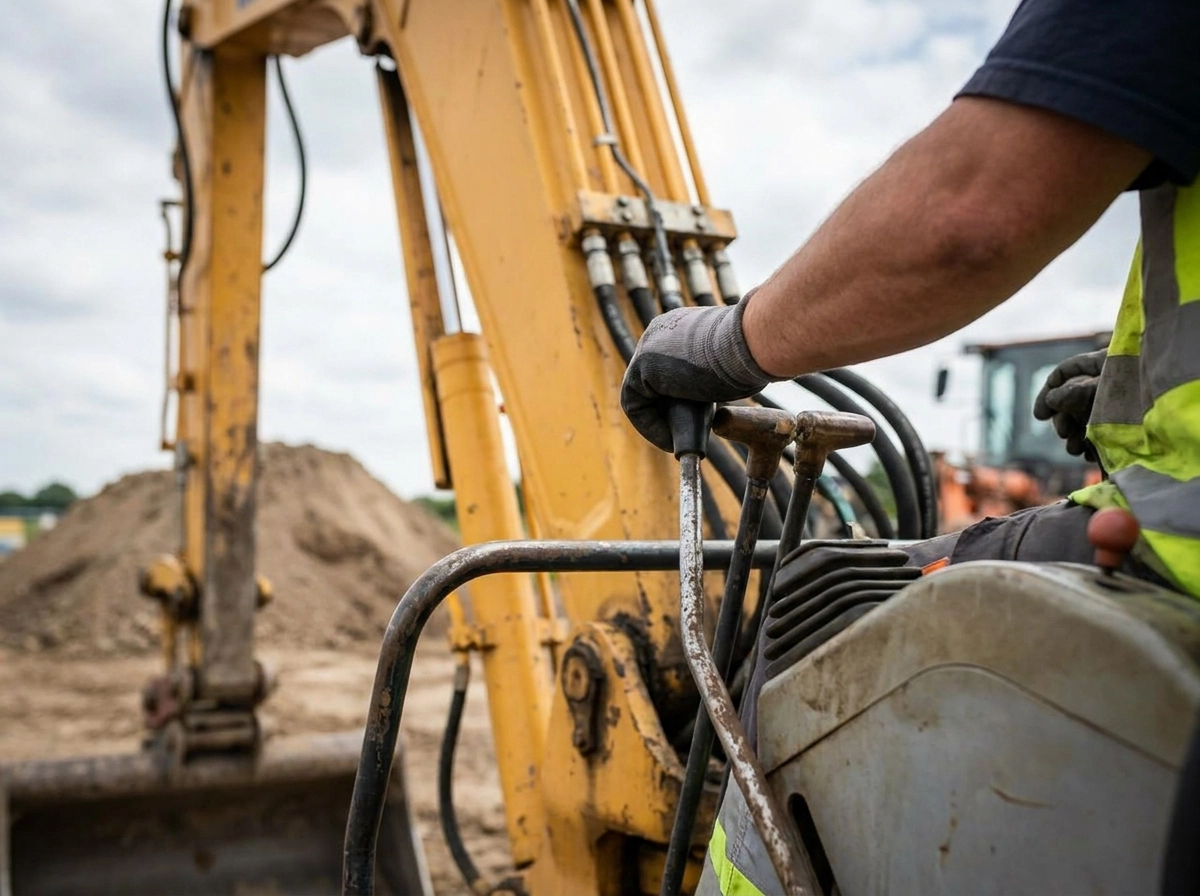
Equipment financing is not a one-size-fits-all tool. Certain industries have built their entire capital structure around it, while others are adopting it rapidly as costs rise and technology accelerates. Understanding which sectors rely on it most can help you benchmark your own financing decisions against what comparable businesses are already doing.
Construction
Construction is the single largest equipment financing vertical by dollar volume. The segment was valued at $103.8 billion in 2025 and is projected to reach $110.55 billion in 2026, with long-term forecasts placing it at $207.51 billion by 2036, growing at a 6.5% CAGR. Loans are the dominant financing structure in this space, holding a 52.7% market share, while earthmoving and roadbuilding equipment leads all asset categories at 41.3% of the market by equipment type. The capital intensity of excavators, graders, cranes, and paving systems makes outright purchase impractical for most contractors. Project-based revenue cycles, where income arrives in phases rather than continuously, make financing the logical default.
Healthcare
Healthcare has been identified as the fastest-growing segment in global equipment finance services through 2032. Imaging systems, diagnostic platforms, surgical robotics, and patient monitoring hardware carry acquisition costs that frequently run into the hundreds of thousands of dollars per unit. Hospitals, outpatient clinics, and specialty practices routinely finance these assets rather than depleting operating reserves. The continued expansion of outpatient care facilities and the rapid pace of clinical technology upgrades are both driving sustained demand for healthcare equipment financing well into the next decade.
Manufacturing and Industrial
Domestic manufacturing is experiencing a significant investment surge in 2026, driven by tariff-related supply chain reshoring. As companies bring production back within U.S. borders, they need industrial machinery, fabrication lines, and production equipment that they cannot afford to purchase outright at scale. According to 2026 equipment financing trend analysis, reshoring pressures are among the primary forces accelerating demand for specialized equipment financing this year. For manufacturers, financed equipment also preserves liquidity during the ramp-up phase before new domestic operations generate consistent revenue.
Restaurants and Food Service
Commercial kitchen equipment, industrial refrigeration systems, ventilation infrastructure, and point-of-sale technology represent substantial upfront costs for food service operators. A single full-scale kitchen buildout can easily reach six figures before the first plate is served. Equipment financing allows restaurant owners to open new locations or upgrade existing ones without draining cash reserves that are better held for staffing, inventory, and marketing during the critical early months of operation.
IT and AI Hardware
This vertical is growing faster than nearly any other. Businesses racing to deploy AI-capable infrastructure, including GPU clusters, high-density servers, and supporting network hardware, are creating explosive demand for specialized financing. Data center financing alone was projected to approach $60 billion in 2025, and that figure is expected to climb. As AI hardware shifts from a competitive advantage to a baseline operational requirement, financing will become the standard acquisition path for technology-intensive businesses of every size.
Transportation and Logistics
Transportation is one of the most established equipment financing verticals in existence. Commercial vehicle fleets, semi-trailers, refrigerated haulers, and specialized logistics equipment have been financed through dedicated programs for decades. Lenders have deep experience underwriting these assets, which tend to hold value well and generate consistent, trackable revenue. The 2026 equipment financing landscape continues to list transportation and logistics among the most active and structurally mature financing categories available to business borrowers today.
Regardless of your industry, the core principle remains the same: equipment financing preserves capital, enables growth, and keeps your business competitive without requiring a single large outlay.
Banks vs. Alternative Lenders: A Direct Comparison
Traditional banks have long dominated the equipment financing landscape. As of 2022, banks held the largest provider market share in the sector, and for decades, they were simply the default option for business owners seeking capital. That dynamic is shifting fast. Non-bank financial companies and alternative lenders are rapidly gaining ground by solving the exact problems banks have historically ignored: slow timelines, rigid qualification criteria, and application processes that discourage borrowers before they even get started. Understanding the structural differences between these two paths will help you choose the one that actually fits your business.
Application Process
The bank application process for equipment financing is thorough by design, but that thoroughness comes at a cost. Expect to provide multi-year financial statements, detailed business plans, personal and business tax returns, and in many cases, formal collateral appraisals for the equipment being financed. The review pipeline is manual, committee-dependent, and paper-heavy, and the entire process can stretch anywhere from four to eight weeks before a decision is issued. Alternative lenders have rebuilt this process from the ground up. Rather than requesting stacks of documents, they use streamlined digital applications that assess revenue patterns and cash flow through connected bank account data. Black Mound, for example, uses a soft application process that can be completed quickly with minimal paperwork, and the application itself has no impact on your credit score. The contrast is not subtle. It is the difference between a multi-week documentation exercise and a process designed to deliver an answer in hours.
Credit Score Impact
This is one of the most overlooked differences between the two paths, and it matters more than most first-time borrowers realize. When you apply for a traditional bank loan, the lender typically initiates a hard credit inquiry through a major credit bureau. That inquiry is recorded on your credit report and can temporarily lower your personal credit score, sometimes by several points. For a business owner already working to maintain strong credit, submitting multiple bank applications in search of the best terms can compound this effect. Alternative lenders that use soft-pull or data-driven underwriting models avoid this problem entirely. A soft inquiry does not appear on your credit report and has zero impact on your score, removing one of the most common psychological barriers to simply exploring your options. Black Mound’s application process is structured this way, which means you can investigate your financing options without the concern that looking will cost you.
Approval Speed and Funding Timeline
Bank decisions on equipment financing applications can take days, and more often take weeks. Even after approval, funding typically requires several additional business days to transfer. For a business owner who needs a piece of equipment to fulfill a contract, replace a failed machine, or capitalize on a time-sensitive opportunity, that timeline can mean lost revenue. Alternative lenders have built their infrastructure specifically to close this gap. Approvals and funding can be delivered in as little as 24 hours, which directly aligns with what alternative lending market data for 2026 confirms: business borrowers now explicitly demand digital-first workflows, instant decisions, and flexible repayment options. The market is not just tolerating speed; it is requiring it.
Flexibility and Eligibility
Banks apply rigid underwriting criteria rooted primarily in credit score thresholds, years in business, and balance sheet strength. This framework systematically disadvantages newer businesses, owners with less-than-perfect credit histories, and businesses in cyclical or seasonal industries where revenue variability is structural rather than a sign of poor management. Alternative lenders evaluate a broader picture of business health. They analyze real-time cash flow data, revenue consistency, and transaction patterns rather than relying on a single credit score to represent an entire business. This architectural difference means eligibility requirements are generally more accessible, and terms can be tailored to match a borrower’s actual situation rather than forcing every applicant through the same rigid template.
Funding Capacity
A persistent misconception is that alternative lenders only serve small transactions. That was historically true for many players in the space, but it no longer reflects the full market. Black Mound offers funding up to $50 million, which positions it as a credible option for mid-market equipment needs alongside smaller SMB transactions. The range covers everything from a single-unit equipment purchase to a large-scale fleet or facility buildout.
Side-by-Side Comparison
| Category | Traditional Bank | Alternative Lender (e.g., Black Mound) |
|---|---|---|
| Application Process | Manual; paper-heavy; committee review | Digital; streamlined; minimal paperwork |
| Credit Impact | Hard pull; temporary score reduction | Soft pull; zero credit score impact |
| Decision Speed | Days to weeks | Hours |
| Funding Speed | Several business days post-approval | As fast as 24 hours |
| Max Funding Amount | Varies; favors established borrowers | Up to $50 million |
| Eligibility Flexibility | Rigid; FICO-centric criteria | Broad; evaluates cash flow and revenue patterns |
| Documentation Required | Multi-year financials, business plan, collateral appraisal | Bank account access; revenue data; minimal paperwork |
The numbers behind the industry confirm what the structural comparison suggests. According to current alternative lending statistics, US alternative lending transaction volume has climbed 43% compared to 2019 figures, reflecting a fundamental shift in where business borrowers are choosing to go. With industry-wide credit approval rates sitting at 78%, near historic highs, and new originations rising nearly 6% year over year in 2026, the market has delivered its verdict clearly. Alternative financing is no longer a fallback option for businesses that could not qualify elsewhere. It is an increasingly primary path, chosen on its own merits by borrowers who understand the practical advantages of speed, accessibility, and a process built for how business actually works today.
What to Look for in an Equipment Financing Partner
Not every financing partner is built the same, and for a beginner evaluating options, the differences between lenders are not cosmetic. They are operational, financial, and in some cases, business-defining. Here are the five criteria that should drive your evaluation.
Funding Speed Is a Strategic Variable
When a contractor receives a 30-day project start notice and the required equipment is not yet on site, the clock starts immediately. A lender who takes two weeks to approve and disburse funds may cost that business the contract entirely. Funding speed should sit at the top of your evaluation checklist, not at the bottom. The best financing partners can deliver approved funds in as little as 24 hours, which transforms financing from a bottleneck into a competitive advantage. Ask every lender upfront: how long from application to funded? Get that answer in writing.
Protect Your Credit Score During the Shopping Process
Many borrowers do not realize that simply applying to multiple lenders can damage their credit score. Hard credit inquiries, which occur when a lender pulls your full credit report as part of a formal application, each reduce your score by a small but cumulative amount. A responsible financing partner uses a soft-pull application process for initial qualification and quoting, which has no impact on your credit score whatsoever. Before submitting any application, ask directly whether the intake process involves a hard or soft inquiry. A lender who requires a hard pull just to give you a rate quote is not putting your interests first.
Verify Funding Capacity Before You Invest Time
A lender with a $250,000 maximum facility cannot serve a construction company financing a $2M excavator fleet. Funding capacity mismatches waste time and delay acquisition. Confirm the lender’s maximum funding limit upfront and ask whether that ceiling can scale as your business grows. Providers like Black Mound offer funding up to $50M, which means they can serve businesses from their earliest equipment purchase through large-scale fleet expansion without requiring a lender change mid-growth.
Demand Full Transparency on Costs
The quoted monthly payment is rarely the whole story. Origination fees, prepayment penalties, variable rate clauses, and end-of-lease residual obligations can significantly alter the true cost of financing. Before signing anything, request a complete term sheet and ask specifically about each of these line items. Reputable lenders provide this information without hesitation. If a lender is evasive about fees or buries terms in fine print, treat that as a red flag and move on.
Match Repayment Structure to Your Cash Flow Reality
A fixed monthly payment works for businesses with stable, predictable revenue. It does not work for a landscaping company that earns 60% of its annual revenue between April and October, or a construction firm that won a large contract but will not invoice for 90 days. The right financing partner can accommodate deferred first payments, step-up schedules that increase as revenue grows, or seasonal skip-payment options. For businesses in cyclical industries, this flexibility is not a luxury; it is a financial necessity. Landscaping equipment financing guides for 2026 confirm that tailored repayment structures are now a standard expectation in seasonal verticals. Ask any lender whether they can customize the repayment timeline to match your actual cash flow calendar, not just a standard amortization schedule.
How to Apply for Equipment Financing: A Step-by-Step Process
Many business owners put off equipment financing not because they cannot qualify, but because they assume the process will be painful. The application will be complicated. The credit pull will hurt their score. The approval will take weeks. With the right financing partner, none of those assumptions hold. The process is straightforward, and the five steps below will take you from identifying a need to receiving funds faster than most people expect.
Step 1: Assess Your Equipment Need and Budget
Before you touch an application, get specific about what you need and what it costs. Identify the exact equipment, request a vendor quote or at minimum a realistic price range, and decide whether you need to own the asset or simply use it. If ownership matters for tax purposes or long-term value, a loan is the right product. If flexibility and lower monthly costs are the priority, a lease or Equipment-as-a-Service arrangement may fit better. This clarity prevents you from applying for the wrong product and speeds up every step that follows.
Step 2: Know Your Numbers Before You Apply
Lenders evaluate three primary inputs: monthly revenue, time in business, and credit profile. Gather that information before you start. Importantly, imperfect credit does not disqualify you. Research shows that 44% of small business owners self-exclude from applying because they assume they will be rejected, a fear that is significantly overstated. Alternative lenders apply flexible underwriting criteria that look beyond credit scores, making approval accessible to a much wider range of businesses than traditional banks typically serve.
Step 3: Choose Your Financing Partner and Submit a Soft Application
With a lender like Black Mound, the application requires only basic business information and revenue data to initiate. There is no hard credit pull, meaning your credit score is not affected simply by applying. The process is streamlined by design, eliminating the documentation burden that slows down traditional bank applications.
Step 4: Review Your Offer Carefully
When your offer arrives, evaluate the total cost of financing, not just the monthly payment. Confirm the term length, whether the rate is an interest rate or a factor rate, any origination or prepayment fees, and what happens to the equipment at the end of the agreement. These details determine the true cost of the financing arrangement.
Step 5: Accept the Offer and Receive Funds
With alternative lenders, funds can be available in as little as 24 hours from approval. Before signing, confirm whether funds are disbursed directly to the vendor or to your business account, and verify the exact timeline. Speed is a genuine competitive advantage that modern lenders offer over traditional institutions, and knowing your disbursement path ensures your equipment acquisition moves forward without delays.
The Equipment Financing Market in 2026: What the Data Shows
The numbers behind equipment financing tell a story that is hard to ignore, and for business owners evaluating their options right now, the timing could not be more favorable.
According to Allied Market Research, the global equipment finance services market was valued at $1.2 trillion in 2022 and is projected to reach $3.1 trillion by 2032, growing at a compound annual growth rate of 9.7%. The industry entered 2026 at approximately $1.3 trillion, on the heels of a record-setting 2025. That kind of sustained growth does not happen by accident. It reflects a fundamental shift in how businesses of every size treat capital expenditure, moving away from outright purchases and toward structured financing arrangements that preserve working capital.
Credit market conditions reinforce that optimism. Approval rates are sitting near historic highs at 78%, while delinquency rates remain stable at just 2%. Together, those figures describe a healthy, accessible market where qualified borrowers are being approved at a strong rate and existing borrowers are meeting their obligations reliably. For small and mid-sized businesses that may have assumed financing was difficult to access, these numbers signal otherwise.
The forward-looking data is equally compelling. Equipment and software investment is projected to climb 6.2% in 2026, with new originations rising nearly 6% year over year. Three sectors are driving much of that acceleration: AI hardware procurement, domestic manufacturing reshoring fueled by supply chain restructuring, and healthcare technology investment, which Allied Market Research identifies as the fastest-growing application in equipment finance globally through 2032.
The competitive landscape is also evolving in ways that directly benefit borrowers. Lenders offering speed, flexibility, and transparency are gaining ground. Digital-first underwriting and faster credit decisions have raised borrower expectations across the board, which means the baseline for what a good financing partner looks like has improved considerably.
For SMB owners, the practical takeaway is straightforward: the market is working in your favor. There are more options available, decisions are being made faster, and financing structures are being built around how businesses actually operate, not how lenders prefer to process paperwork.
Making the Right Equipment Financing Decision for Your Business
Equipment financing is no longer an alternative strategy. It is the mainstream path for business capital expenditures in 2026, with more than 75% of businesses choosing to finance rather than purchase equipment outright. The question has shifted from whether to finance to which structure and which partner fits your specific situation.

The decision framework is straightforward. If you need long-term ownership and stable monthly payments, an equipment loan is your match. If flexibility and the ability to upgrade matter more than ownership, a lease fits better. If your equipment needs are recurring or unpredictable, a line of credit gives you the adaptability you need. If aligning costs directly to revenue cycles is the priority, an Equipment-as-a-Service model is worth exploring. Match the structure to your ownership goals and cash flow reality, and prioritize lenders who offer soft-pull applications, fast funding, and transparent terms.
Black Mound is built for exactly this moment. With funding available up to $50M, a streamlined soft application that carries no impact on your credit score, and funds that can reach your account in as little as 24 hours, Black Mound delivers the speed and accessibility that modern business owners require.
Find out how much your business qualifies for with no impact on your credit score.
Conclusion
Equipment financing does not have to feel complicated or overwhelming. The right option comes down to understanding a few core principles: your cash flow needs, how long you plan to use the equipment, and the total cost over time. Whether you choose a loan to build ownership equity, a lease to stay flexible, or a sale-leaseback to free up capital, each path has real advantages depending on your situation.
The most important step is not waiting until your outdated equipment becomes a crisis. Start evaluating your options now, compare lenders carefully, and ask the right questions before signing anything.
Your equipment should be working for your business, not holding it back. Review BlackMound’s equipment financing options, connect with a trusted financing partner, and move forward with the tools your growth demands.