
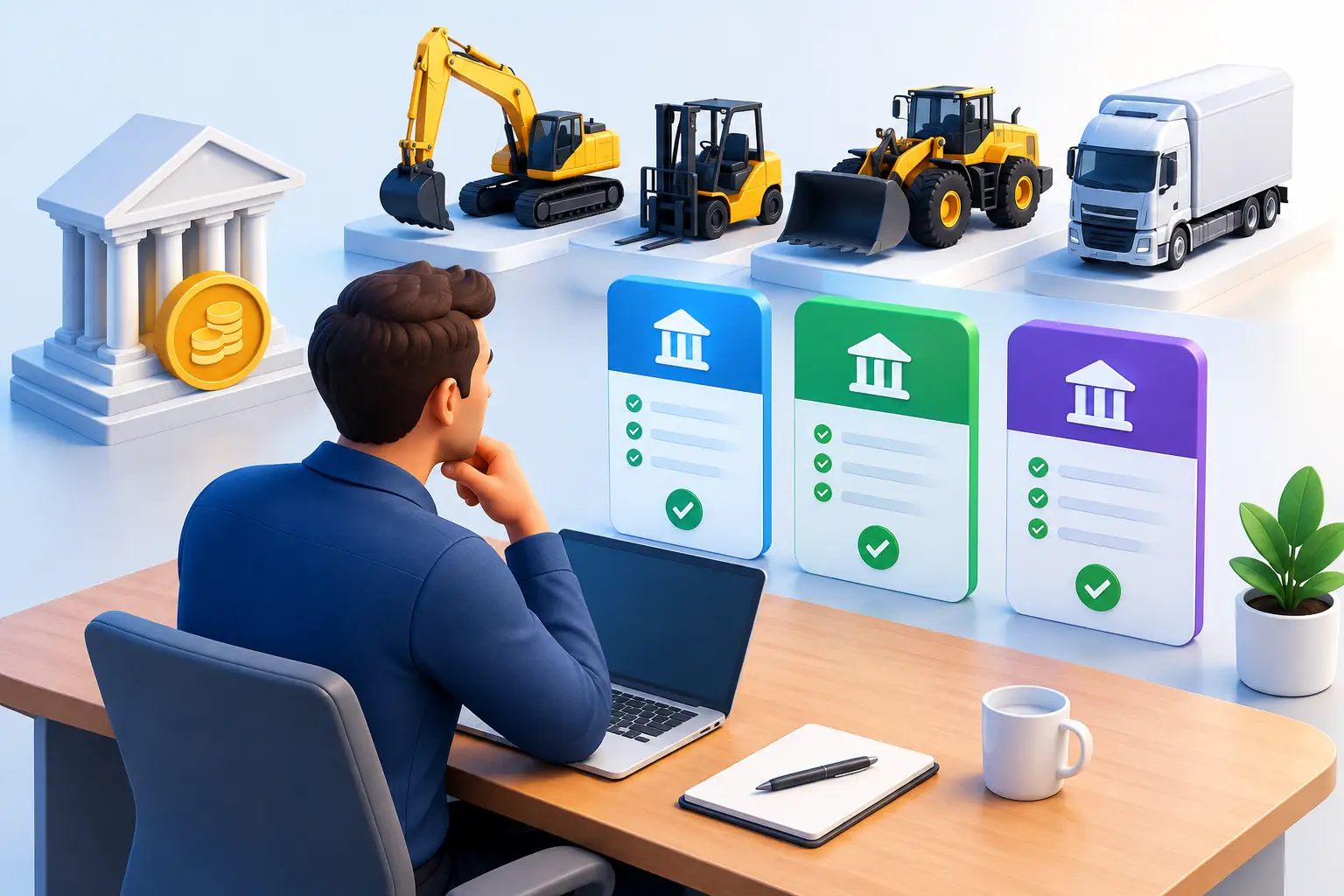
A new excavator, production line, delivery vehicle, or medical device can create revenue long before it is fully paid off. That is why finding the best equipment financing companies is less about chasing the lowest advertised rate and more about securing terms that fit the way your business earns, spends, and grows.
The right lender can help you acquire essential assets while preserving working capital for payroll, inventory, marketing, and unexpected expenses. The wrong structure can turn a productive asset into a monthly cash-flow problem. A smart comparison starts with the equipment itself, then moves to the financing structure, lender requirements, and total cost.
What Makes an Equipment Financing Company a Good Fit?
There is no single best provider for every business. A manufacturer purchasing a $2 million machine, a trucking company adding three vehicles, and a startup buying its first commercial kitchen equipment may all need different approval standards, terms, and repayment options.
The strongest equipment financing companies evaluate more than a generic credit score. They consider the equipment’s resale value, your time in business, annual revenue, industry, cash flow, and the size of the requested transaction. That broader view matters when a business is growing quickly, rebuilding after a slow season, or purchasing specialized equipment that a traditional bank may not understand.
A good financing partner should be clear about the basics early: estimated payment, term length, down payment, collateral requirements, documentation, and whether the financing is a loan or a lease. If the conversation stays vague until late in the process, it is difficult to compare the real cost of capital.
Speed also matters. A vendor may require a deposit to hold equipment, while a broken machine can stop revenue immediately. For time-sensitive purchases, look for a lender or funding platform that can assess your initial qualifications through a soft credit check and move quickly after approval.
Equipment Loans vs. Equipment Leases
Before comparing providers, decide whether ownership is your priority. Equipment loans and equipment leases can both be useful, but they solve different business needs.
With an equipment loan, the business typically owns the asset once the loan is repaid. The equipment usually serves as collateral, which can support more favorable pricing than unsecured financing. This route often makes sense for assets with a long useful life, such as construction equipment, heavy machinery, medical devices, and vehicles you expect to operate for years.
A lease may be a better fit when equipment becomes outdated quickly or when you want lower upfront costs. Technology, office equipment, and certain manufacturing systems can lose relevance before they wear out. Depending on the lease structure, you may return the equipment, renew the lease, or purchase it at the end of the term.
The trade-off is straightforward. Loans generally build ownership and may offer depreciation benefits, while leases can provide flexibility and protect cash flow. The best choice depends on your tax strategy, replacement cycle, and plans for the equipment after the financing term ends. Discuss tax treatment with a qualified tax professional rather than assuming every lease or loan will produce the same result.
How to Compare the Best Equipment Financing Companies
Start with the full financing picture, not just a monthly payment. A lower payment can result from a longer term, a residual payment, or added fees. It may help cash flow today but cost more over the life of the agreement.
Approval criteria and documentation
Bank lenders often favor established businesses with strong credit, consistent profitability, and detailed financial records. They can be a solid choice when timing is flexible and the business meets their underwriting standards.
Alternative lenders and financing marketplaces may be more flexible with newer businesses, uneven revenue, or industry-specific assets. They may weigh bank statements, equipment invoices, and operating history differently than a bank. This can expand access, although rates or down payment requirements may be higher for borrowers with more risk factors.
Ask what the lender needs before you apply. Typical documents include a government-issued ID, business bank statements, recent financial statements, tax returns, a vendor quote, and details about the equipment. Smaller transactions may require less paperwork, while large or specialized purchases usually receive deeper review.
Term length and useful life
The financing term should make sense for the asset’s useful life. Financing a machine for seven years when it will need replacement in three can leave you paying for equipment you no longer use. On the other hand, using a very short term for a long-lasting asset can place unnecessary pressure on monthly cash flow.
A practical target is to match the repayment period to the period in which the equipment produces value. If a machine is expected to improve output for five years, a three- to five-year term may be reasonable. The right answer depends on margins, maintenance costs, expected utilization, and how quickly the investment pays back.
Total cost, fees, and prepayment rules
Request a clear breakdown of the proposed structure. Review the interest rate or factor rate, origination fees, documentation fees, down payment, end-of-term purchase option, late fees, and any required insurance. For leases, confirm whether a residual amount or buyout payment applies.
Also ask about prepayment. Some equipment loans allow early payoff with little or no penalty. Others calculate charges in a way that limits savings from paying early. If you expect a strong season, a major contract, or a future refinance, this detail can materially affect the total cost.
Vendor relationships and equipment expertise
Some lenders specialize in certain industries or work directly with equipment vendors. That experience can speed up valuation, documentation, and funding. It may also provide access to manufacturer incentives or financing programs designed for a particular brand.
Still, vendor financing is not automatically the lowest-cost option. It is worth comparing it with an independent lender or a marketplace that can review multiple potential funding paths. The best offer is the one that works for your business, not simply the one presented at the point of sale.
When Equipment Financing Is Not the Only Answer
Equipment financing is usually the logical first option when the asset is identifiable, durable, and valuable as collateral. But it is not always enough to cover the entire project.
A restaurant opening a second location may need kitchen equipment, tenant improvements, opening inventory, and payroll reserve. A contractor may need a new truck plus working capital to cover labor and materials before customer payments arrive. Financing only the equipment can preserve capital, but it may leave a gap elsewhere in the project.
In those cases, a blended funding strategy may make sense. Equipment financing can cover the hard asset, while a working capital product, line of credit, SBA loan, or other solution supports operating needs. Separating these needs can prevent you from using expensive short-term capital to pay for a long-life asset.
Prepare Before You Request Financing
A stronger application begins before you submit it. Have a current equipment quote with model details, purchase price, delivery costs, and any installation expense. Be ready to explain how the asset will affect revenue, capacity, labor costs, or operating efficiency.
For example, do not simply say a new machine will help the business grow. Explain that it will increase production from 500 to 900 units per week, reduce outsourced work, or allow you to accept a contract that is already in hand. Clear numbers make it easier for a lender to understand the business case.
It also helps to know your comfortable payment range. Build that number from normal operating cash flow, not your best month of the year. Leave room for maintenance, insurance, seasonal dips, and other debt obligations. A financing offer is only useful if the payment remains manageable when business is merely steady.
A Faster Way to Find the Right Financing Path
Comparing lenders one by one can take time, especially when each application involves different forms and credit inquiries. A funding advisory platform can simplify that process by reviewing the purchase, business profile, and timeline, then matching the request to an appropriate lender pathway.
BlackMound helps businesses explore equipment financing alongside other capital options through a no-obligation intake and soft-credit application. That can be especially useful when the purchase is part of a broader expansion and you need to protect cash flow while moving quickly.
The most productive equipment purchase is not necessarily the one with the shortest approval or the lowest headline payment. It is the one financed on terms that let the asset generate more value than it costs, without slowing the rest of your business down.


