
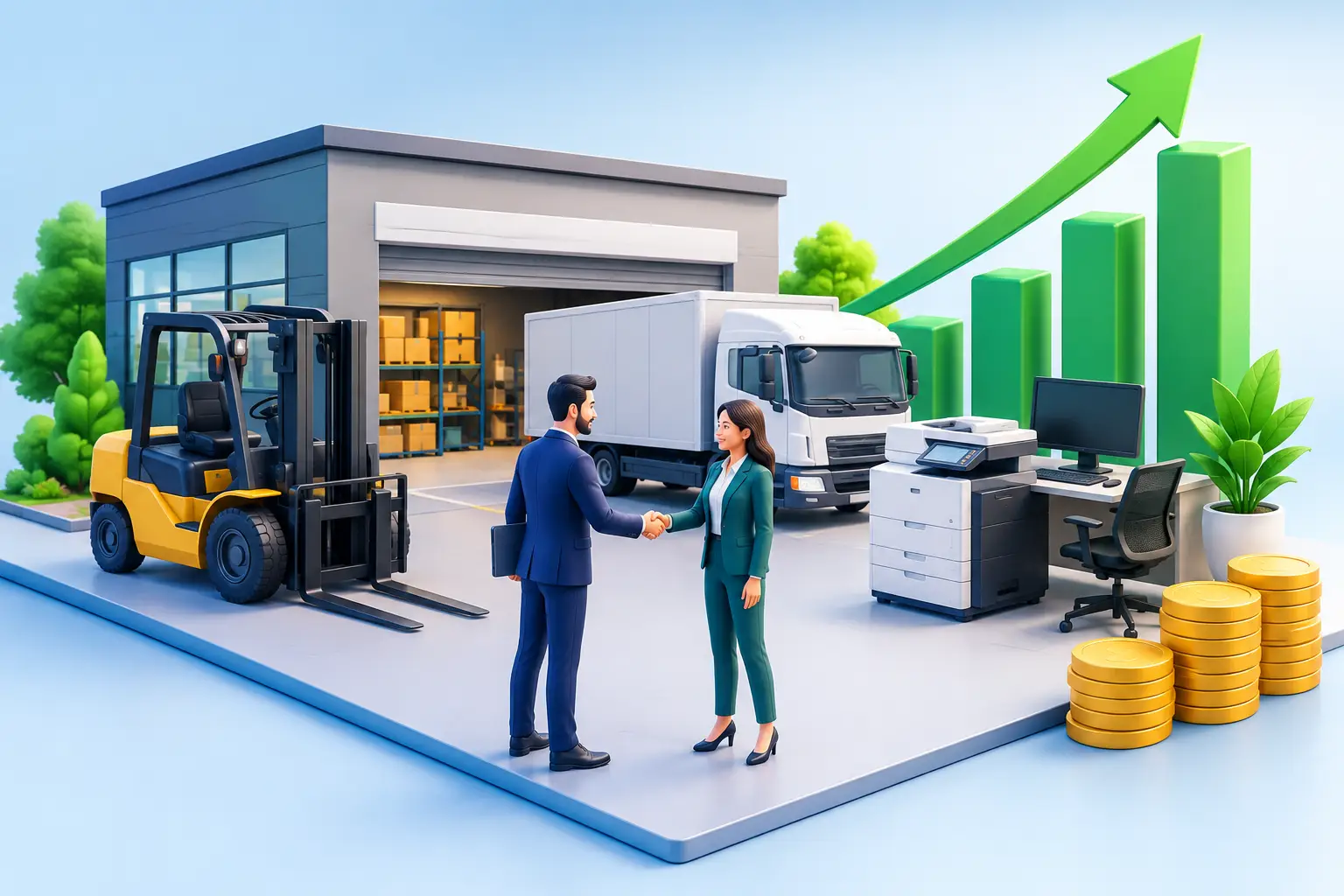
A $90,000 piece of equipment can create a hard choice for an otherwise healthy business: pay cash and tighten day-to-day liquidity, or delay the purchase and risk losing production, sales, or a critical contract. Business equipment financing gives owners a third option – acquire the asset now and repay the cost over a schedule that better fits the business.
For a contractor, that may mean adding a skid steer before the busy season. For a medical practice, it may mean replacing aging diagnostic equipment. For a manufacturer, it may mean increasing capacity without draining the capital needed for payroll, inventory, and operating expenses. The right structure is not simply the one with the lowest advertised rate. It is the one that supports the asset, the company’s cash flow, and the expected return on the purchase.
What Business Equipment Financing Covers
Equipment financing is purpose-built capital used to buy or refinance tangible business assets. In many transactions, the equipment itself serves as collateral. That can make this type of financing more accessible than an unsecured loan, particularly when the equipment has a clear resale value and a useful life that supports the repayment term.
Eligible equipment can include vehicles, trailers, construction machinery, manufacturing lines, restaurant equipment, point-of-sale systems, medical devices, agricultural equipment, technology hardware, and specialized tools. New equipment is generally straightforward to finance, but many lenders will also consider used equipment. The age, condition, supplier, and expected life of a used asset can affect the available term and down payment.
The central question is simple: will this equipment help the business produce more revenue, reduce labor or operating costs, or protect an essential operation? If the answer is yes, financing may allow the asset to start generating value before it is fully paid off.
Equipment Loans vs. Equipment Leases
An equipment loan is typically the better fit when ownership is the goal. The business borrows against the cost of the asset, makes regular payments, and owns the equipment once the balance is paid. This structure can make sense for assets with a long useful life, such as heavy machinery, vehicles, or production equipment that the company expects to operate for years.
An equipment lease is often useful when flexibility matters more than long-term ownership. Lease structures vary. Some provide an option to purchase the equipment at the end of the term, while others are designed for equipment that may need frequent replacement, such as certain technology or office systems. A lease can reduce upfront costs, but owners should understand the end-of-term obligations before signing.
Neither structure wins in every situation. A growing logistics company may want to own a fleet vehicle that will remain productive for a decade. A startup with rapidly changing technology needs may prefer a structure that avoids tying up capital in equipment that could become outdated quickly. The useful life of the asset should guide the financing term, not just the lowest monthly payment.
Protect Working Capital Without Ignoring Total Cost
Paying cash eliminates interest expense, but it can leave a business exposed when receivables are late, inventory costs rise, or an unexpected repair hits. Financing preserves liquidity that can be used where it has the greatest immediate impact.
That does not mean financing is automatically the best choice. A business should compare the total cost of financing against the expected return from the equipment. Consider the rate or factor cost, origination fees, documentation fees, insurance requirements, down payment, and any early payoff provisions. A low payment can look attractive if the term is long, but a longer term may increase the total amount paid.
It also helps to estimate whether the asset can support its own payment. If a new packaging machine increases throughput enough to add $12,000 in monthly gross profit, a $3,000 monthly payment may be a productive use of capital. If the expected benefit is uncertain or seasonal, the business may need a shorter commitment, more cash reserves, or a different funding structure.
What Lenders Review
Lenders evaluate both the equipment and the business behind the request. Strong revenue, consistent bank activity, time in business, and a manageable debt profile generally improve financing options. However, equipment financing is not limited to large, established companies. Startups and newer businesses may still qualify, especially when the equipment is essential to operations and the owner has solid personal credit or relevant industry experience.
The asset itself matters. Standard, easy-to-value equipment from a reputable dealer is often easier to finance than highly customized machinery with a narrow resale market. Lenders may also look at the vendor quote, whether the equipment is new or used, and whether it will be titled or insured.
Before applying, have these materials ready:
- A detailed equipment quote or invoice showing the vendor, item description, and price
- Recent business bank statements and, when requested, basic financial statements
- Business formation documents and identification for the owners
- A clear explanation of how the equipment will support revenue, capacity, or cost savings
Preparation can reduce back-and-forth and help match the request to the right lender from the start.
Choose Terms That Match the Asset and Your Revenue Cycle
A financing term should make sense for the equipment’s expected productive life. Financing a short-lived asset for too long can leave a business making payments after the equipment has been replaced. On the other hand, forcing a long-life asset into an overly short term may create unnecessary pressure on monthly cash flow.
Seasonality deserves the same attention. A landscaping company may earn most of its revenue over a few peak months. A restaurant may experience predictable seasonal swings. If payments are fixed, the owner needs enough working-capital cushion to carry the obligation during slower periods. Some lenders offer structures that better align with a business’s revenue pattern, but availability depends on the lender, asset, and borrower profile.
Down payments also involve a trade-off. More money down can lower the payment and improve approval odds, but it reduces the cash retained in the business. The right amount is one that strengthens the transaction without creating a new cash-flow problem.
Common Mistakes to Avoid
The biggest mistake is shopping by monthly payment alone. A lower payment may come with a longer term, a larger final payment, or higher overall cost. Ask for the full repayment picture, including any purchase option or residual amount on a lease.
Another common issue is financing more than the equipment can reasonably justify. Add-ons such as delivery, installation, warranties, and software may be financeable, but they should be clearly disclosed and connected to the asset’s operation. Borrowing for unrelated working-capital needs through an equipment transaction can complicate approval and create a mismatch between the financing and the business need.
Finally, do not wait until the equipment failure becomes an emergency if replacement is foreseeable. Urgent needs can still be funded, but planning ahead gives you more time to compare terms, gather documentation, and protect your negotiating position.
A Faster Path to the Right Equipment Funding
The best financing route depends on the asset, your time in business, credit profile, cash flow, and how quickly you need to move. A traditional lender may be a strong option for a well-established company with time to complete a conventional underwriting process. A specialized equipment lender may better understand a particular asset class. For businesses that need broader support, the equipment purchase may also need to be considered alongside working capital, a line of credit, or another financing need.
BlackMound simplifies that early search with a no-obligation intake and soft-credit application, helping business owners identify funding options without starting with a hard credit inquiry. After approval, some funding paths can move quickly, with access to funds as soon as 24 hours in qualifying situations.
Equipment should create momentum, not a new financial bottleneck. Before you sign, make sure the payment, term, ownership path, and expected return all support the business you are building.


