
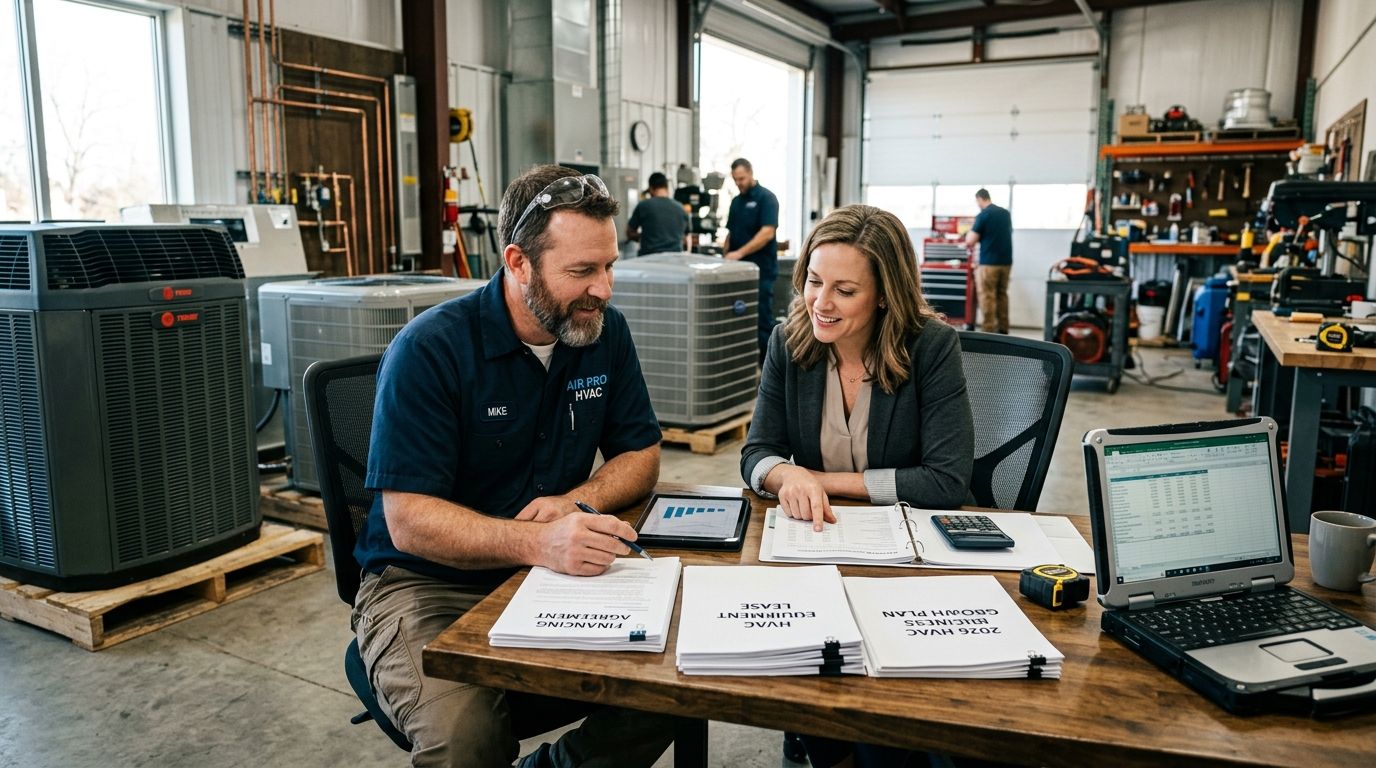
Equipment financing for HVAC contractors is a funding structure that pays for trucks, rooftop units, mini-splits, brazing rigs, and diagnostic tools upfront while you repay over a fixed term, with the goal of keeping crews working instead of waiting on a cash reserve to clear. HVAC work runs on tight seasonal windows — a compressor failure in July or a furnace breakdown in January doesn't wait for your bank account to catch up, and that's the gap this financing is built to close.
- Equipment financing for HVAC contractors funds trucks, RTUs, and tools without draining cash reserves in 2026.
- BlackMound funds equipment purchases up to $50M with decisions in as soon as 24 hours.
- SBA loans fit large, long-life fixed equipment; equipment financing wins on speed and flexibility.
- Match the loan term to the equipment’s working life — financing a 3-year tool over 7 years wastes money.
- Leasing preserves cash flow but builds no equity, which matters if you plan to keep the equipment past the term.
Why equipment financing matters for HVAC contractors
HVAC contractors carry higher per-unit equipment costs than most trade services — an outfitted service truck, a crane setup for a rooftop unit swap, or a full brazing and recovery rig all run well past what a hand-tool trade needs. Waiting weeks on a bank term loan to replace a failed compressor truck mid-summer costs jobs, not just paperwork. Equipment financing for HVAC contractors solves that timing mismatch because the equipment itself often serves as collateral, which is why equipment financing companies generally underwrite faster than an unsecured working capital loan.
In 2026, HVAC contractors compete for the same skilled labor pool as electrical and plumbing trades, and equipment reliability is one of the few variables a contractor fully controls. A truck sitting in a shop for repairs instead of on a job site is a direct hit to revenue, not a line item you can defer.
How HVAC contractors get equipment financing right
Here's the process HVAC contractors use to secure financing that fits how they actually run jobs — from an owner-operator with two trucks to a 40-person commercial HVAC shop.
Audit your current equipment fleet and financing gaps
Start with a hard inventory of what you own and what it's worth today, not what it cost when new.
- List every truck, RTU crane, and diagnostic tool by age and remaining useful life.
- Flag equipment operating past its expected service life — recovery machines and gauges older than 8-10 years fail without warning.
- Separate must-replace-now items from nice-to-have upgrades.
- Note which purchases are seasonal (pre-summer AC stock) versus year-round (service trucks).
Calculate the true cost of the equipment you need
The number a lender finances is the invoice, not your ballpark estimate.
- Get written quotes from equipment dealers, not verbal estimates.
- Add installation, permitting, and calibration costs to the equipment price, not just the sticker.
- Factor in trade-in value for the old unit if the dealer offers one.
- Build in a 5-10% buffer for delivery delays or spec changes.
Choose the right financing structure for the equipment type
Not every purchase belongs on the same type of loan.
- Use equipment financing for trucks, RTUs, and tools with a clear resale value and a 3-10 year useful life.
- Consider an SBA lender for large, facility-attached systems or a major fleet expansion.
- Use a working capital advance only to bridge cash flow, not to buy hard assets outright.
- Avoid stretching a 10-year term over equipment with a 5-year service life — you'll still be paying after it's scrapped.
Gather your HVAC business financials before applying
Having these ready before you apply cuts underwriting time significantly.
- Pull the last 12 months of bank statements and your most recent business tax return.
- Prepare a current accounts receivable aging report if you invoice commercial clients on terms.
- List existing debt and lease obligations — lenders weigh total monthly obligations against revenue.
- Have your EIN, business license, and equipment quote ready before you start.
Compare lenders and financing terms side by side
Speed and structure matter as much as the rate.
- Compare approval speed, not just headline terms — a slower decision can cost a summer install job.
- Ask whether the lender uses a soft credit pull to check eligibility before a hard inquiry.
- Check whether the equipment itself is the only collateral required, or a blanket lien applies.
- Confirm the term length matches the equipment's expected useful life, not the longest term offered.
- It's worth stacking general business loans for contractors against equipment-specific financing before committing to either.
Apply for equipment financing and move fast on approval
Once your paperwork is ready, speed becomes the deciding factor.
- Submit the equipment quote, financials, and application together to avoid back-and-forth delays.
- Ask for a written funding timeline before signing — BlackMound targets decisions in as soon as 24 hours on qualifying applications.
- Lock in delivery dates with the equipment dealer once financing is approved, not before.
- Confirm the first payment date lines up with your job cash flow, not the calendar month.
Maintain the equipment and the financing relationship after funding
The work doesn't stop at approval.
- Keep maintenance records — resale value and future financing eligibility both depend on documented upkeep.
- Track the equipment against its depreciation schedule so refinancing or upgrade timing isn't a surprise.
- Revisit financing terms before the loan matures if another equipment purchase is coming.
- Build the next equipment cycle into your annual budget instead of reacting to a breakdown.
Equipment financing options for HVAC contractors compared
| Option | Best for | Key limitation |
|---|---|---|
| Equipment financing (BlackMound) | HVAC contractors buying trucks, RTUs, or diagnostic tools who need funding fast | Financing is secured against the specific equipment |
| SBA 504 loan | Large, long-life fixed equipment or facility-attached systems | Longer approval timeline and heavier documentation |
| Equipment leasing (third-party lessor) | Contractors who upgrade equipment every few years | Builds no equity in the equipment |
| Working capital advance | Bridging cash flow, not buying equipment outright | Not structured for hard asset purchases |
| Bank term loan | Established HVAC businesses with strong credit history | Slower underwriting, often needs collateral beyond the equipment |
Equipment financing is the fastest path for HVAC contractors who need a truck or RTU running within days, not weeks — SBA loans win when the equipment is large, permanent, and the timeline can stretch.
Get equipment financing decisions fast
BlackMound funds HVAC equipment up to $50M, decisions in as soon as 24 hours.
Common mistakes HVAC contractors make with equipment financing
- Financing off a verbal estimate instead of a written equipment quote, then getting under-approved when the real invoice comes in higher.
- Ignoring seasonal cash flow — taking on a loan payment that hits hardest during your slowest months, whether that's winter for AC-heavy markets or summer for heating-heavy ones.
- Matching a long loan term to short-life equipment, like financing a diagnostic tool over 7 years when it needs replacing in 4.
- Skipping rate comparison because one lender responded fastest, without checking if a soft credit pull option existed elsewhere.
- Treating equipment financing and working capital as interchangeable, then running short on payroll because the loan is locked to the truck.
FAQ
What’s the best equipment financing for HVAC contractors in 2026?
Equipment financing tied directly to the truck, RTU, or tool being purchased is generally the fastest option for HVAC contractors in 2026 because the equipment itself serves as collateral. BlackMound offers this structure with funding up to $50M and decisions in as soon as 24 hours.
Is SBA financing better than equipment financing for HVAC trucks?
For a service truck or standard equipment, direct equipment financing usually beats an SBA loan on speed. SBA loans make more sense for large, facility-attached systems or major fleet expansions where the longer approval timeline is acceptable.
How much does equipment financing for HVAC contractors cost?
Cost depends on the lender, equipment type, term length, and the contractor’s credit and revenue profile, so there’s no single rate that applies across the board. Compare written terms from more than one lender before signing rather than relying on an advertised rate.
Can HVAC contractors with bad credit qualify for equipment financing?
Approval odds depend on more than credit score alone — time in business, revenue, and the equipment’s resale value all factor in. Contractors with credit challenges should also check options built for that situation directly.
How fast can HVAC contractors get equipment financing approved?
Funding decisions can come in as soon as 24 hours once the equipment quote and financials are submitted together. Delays usually come from incomplete paperwork, not the lender’s process.
Should HVAC contractors lease or finance equipment?
Leasing keeps upfront cash outlay lower but builds no equity, while financing costs more monthly but leaves you owning the equipment at the end of the term. Contractors who keep equipment past its financing term generally come out ahead financing rather than leasing.
What credit score do HVAC contractors need for equipment financing?
There’s no universal minimum score across lenders — approval weighs time in business, revenue, and the equipment being financed alongside credit history. A soft credit pull lets a contractor check eligibility before committing to a hard inquiry.
Can startup HVAC businesses get equipment financing?
Startups have fewer options than established contractors, since most equipment lenders weigh time in business heavily, but dedicated startup funding paths exist for newer companies. Check startup-specific loan options if the business has been operating less than two years.
One last thing
Most HVAC contractors underwrite against the estimate they get verbally from a dealer, then get surprised when the actual invoice runs higher and the financing amount doesn't cover the gap. Get the written quote first, every time — it's the single fastest way to avoid a mid-application funding shortfall in 2026.
Related guides


